
What Affects the Cost of Tiling? Key Factors for Windsor Homeowners
What affects the cost of tiling in Windsor?
The cost of tiling depends on far more than the square metre rate for the tiles. Every room presents different challenges, and the final figure can be influenced by the condition of the surface, the tile pattern, access to the property and the preparation required before installation.
For Windsor homeowners planning a bathroom renovation, kitchen refurbishment, wet room or standalone tiling project, understanding these factors makes it easier to compare quotes and plan the work properly.
1. The size and shape of the area
The total area is an obvious starting point, but room shape also matters. A large, open floor may be relatively straightforward to measure and tile. A smaller bathroom with alcoves, pipe boxing, window reveals and multiple corners can take more time because each tile may need to be carefully cut and positioned.
The number of walls and floors being tiled will also affect the scope. A splashback behind a kitchen worktop is a different project from full-height wall tiling combined with a tiled bathroom floor.
2. The type and size of tile
Tile materials vary considerably. Ceramic, porcelain, natural stone and specialist decorative tiles each have different handling and installation requirements. Porcelain tiles, for example, are dense and hard wearing, but they may require suitable cutting equipment and careful preparation.
Large-format tiles can create a clean, contemporary finish, although they demand a flatter background and precise positioning. Smaller tiles may involve more individual pieces, more joints and more time spent checking the alignment.
The tile itself is only one part of the materials cost. Adhesive, grout, trims, movement joints, sealants and preparation products all need to be suitable for the room and the tile being installed.
3. Surface preparation
A sound, even background is essential for a durable tiled finish. If the existing wall or floor is uneven, damaged, damp or covered with unsuitable material, it may need attention before tiling can begin.
Preparation might include removing old tiles, repairing plasterboard, levelling a floor or making good areas around plumbing. In wet areas, additional waterproofing may be needed to protect the structure behind the tiles. This is particularly important for showers, wet rooms and bathroom floors exposed to regular water.
Skipping preparation can lead to cracked grout, loose tiles, lipping between tiles or water penetrating behind the finished surface. A detailed quotation should make clear whether preparation and removal of existing finishes are included.
4. The layout and pattern
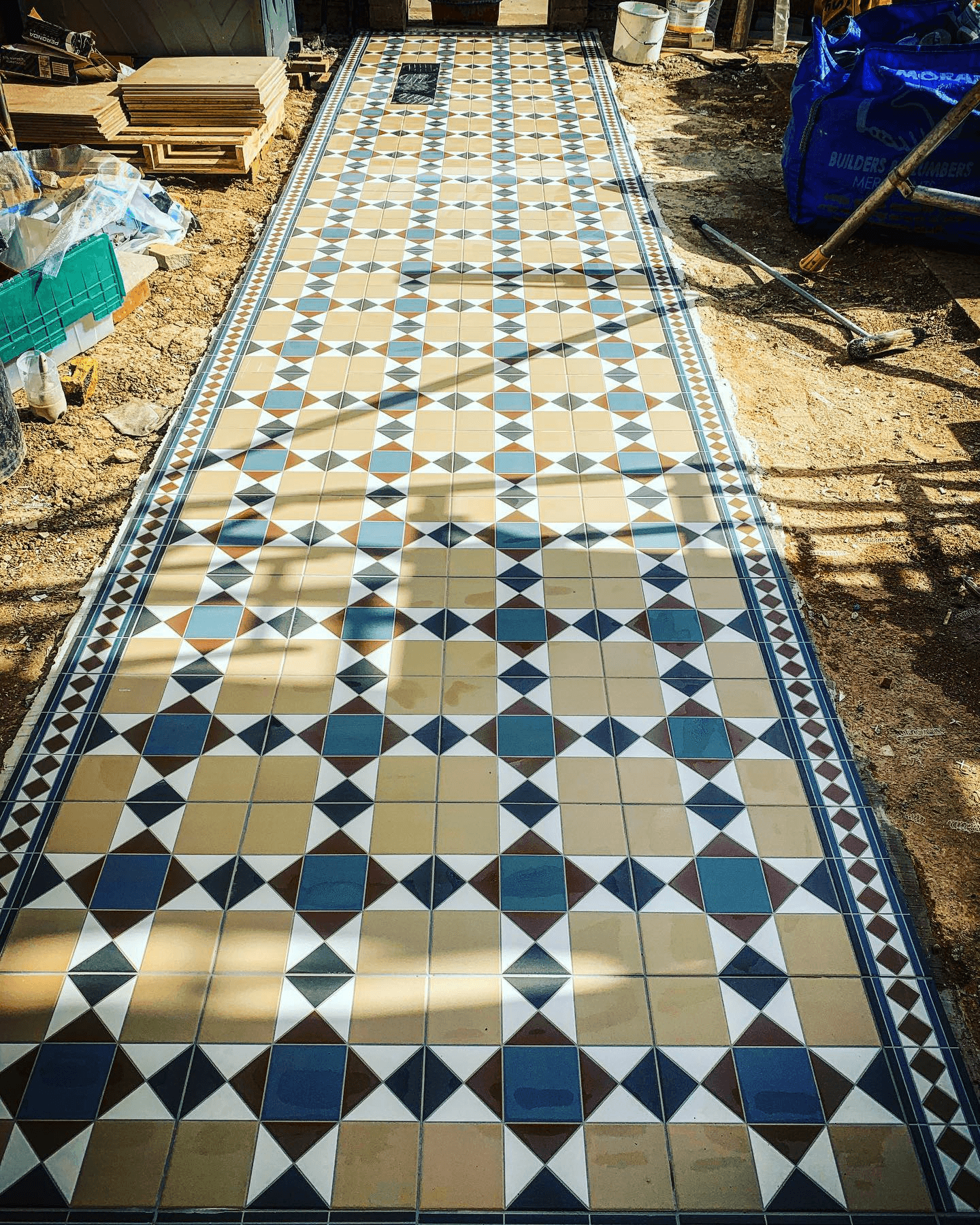
A simple grid layout is usually less involved than a complex pattern. Herringbone, brick bond, chevron and Victorian tile patterns require more planning, cutting and setting out. The design may also create more waste because tiles need to be cut to maintain the pattern around corners and openings.
The starting point is important too. A professional layout should avoid awkward slivers of tile in prominent areas and keep the visual lines balanced across the room. Spending time on the setting out can make a significant difference to the finished appearance.
5. Cutting around fittings and features
Bathrooms and kitchens often contain several fixed points that require accurate cuts. These can include toilets, basins, shower fittings, radiator pipes, sockets, switches, door frames and kitchen units.
Curved cuts, exposed edges and detailed areas around niches or recessed shelves can all add to the installation time. If sanitaryware or units are being replaced as part of a wider project, the sequence of work needs to be considered before the tiles are installed.
6. Access and the condition of the property
Access can affect how efficiently materials and tools can be brought into the property. Town-centre homes, properties with restricted parking, narrow staircases or occupied rooms may require more planning than a clear ground-floor space.
Older properties around Windsor can also present unexpected conditions behind existing finishes. Walls may not be square, floors may have moved over time and previous alterations may have left uneven surfaces. These issues do not always become clear until the existing tiles or coverings are removed.
7. Whether plumbing or bathroom work is included
Tiling is often part of a larger bathroom installation or renovation. Moving a shower, changing the position of a basin or replacing pipework can affect the sequence and scope of the project. Plumbing and tanking may need to be completed before the walls and floor are ready for tiles.
Combining the work under one coordinated plan can help avoid clashes between trades and reduce the risk of installing finishes before the room is ready. This is especially relevant for full bathroom projects and wet rooms.
8. Removal, disposal and finishing details
Existing tiles may need to be removed, loaded out and disposed of before the new installation starts. The condition of the background underneath will then determine whether further repairs or levelling are required.
Finishing details also form part of the overall scope. These may include silicone joints, tile trims, thresholds, grout colour, edge finishing and sealing where appropriate. They are small details, but they have a major effect on the final result and the long-term appearance of the room.
How to compare tiling quotes
Ask each contractor to clarify the area being tiled, the preparation included, the tile layout, the materials allowed for and whether removal of existing finishes is part of the work. It is also worth checking who is responsible for supplying tiles and what happens if additional preparation is found after removal.
A quote should reflect the actual requirements of the room rather than relying on a simple rate that may not include important preparation or finishing work. Supplying measurements, photographs and details of the desired tile can help create a more accurate assessment, but an on-site visit is often useful for renovation work.
Tiling and bathroom renovation in Windsor
For homeowners in Windsor considering new tiling, bathroom installation, bathroom refurbishment, wet rooms or kitchen refurbishment, James Tiling & Bathrooms can discuss the project and the factors affecting its scope. The service also covers properties across Gerrards Cross, Beaconsfield, Ascot, Sunninghill, Sunningdale, Cookham, Richmond upon Thames, Kingston upon Thames, Walton-on-Thames, Wokingham and Guildford.
Request a quote with the room details, preferred tiles and any wider plumbing or bathroom requirements. A clear plan at the start helps keep the finish precise and the work properly coordinated.